There are too many people to fit on this page. Some of the prominent individuals are featured here because there stories are available and their life and times illuminate the history of the region.
Pathfinders
Prior the the 1859 Colorado Gold Rush, the area was peopled and contested by many groups. Their stories, conflicts and lives inhabit this geography, as subsequent waves of inhabitants have done. Stories of these people live in memory and legend, but have not come down to us as individuals. We are left with those who recorded thir passage through this region. These are the expeditions of “discovery” that were pathfinders for those to come.
Stephen Long
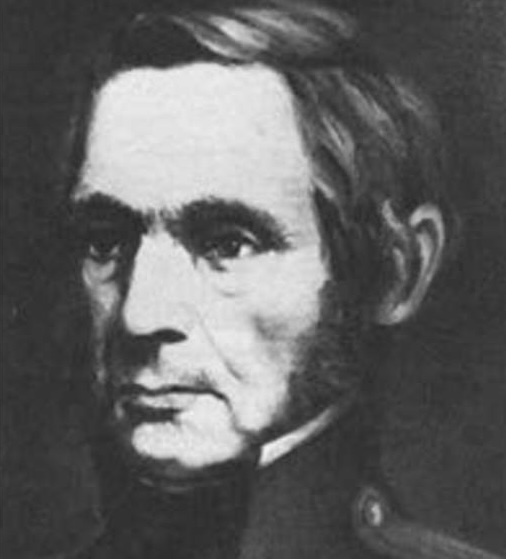
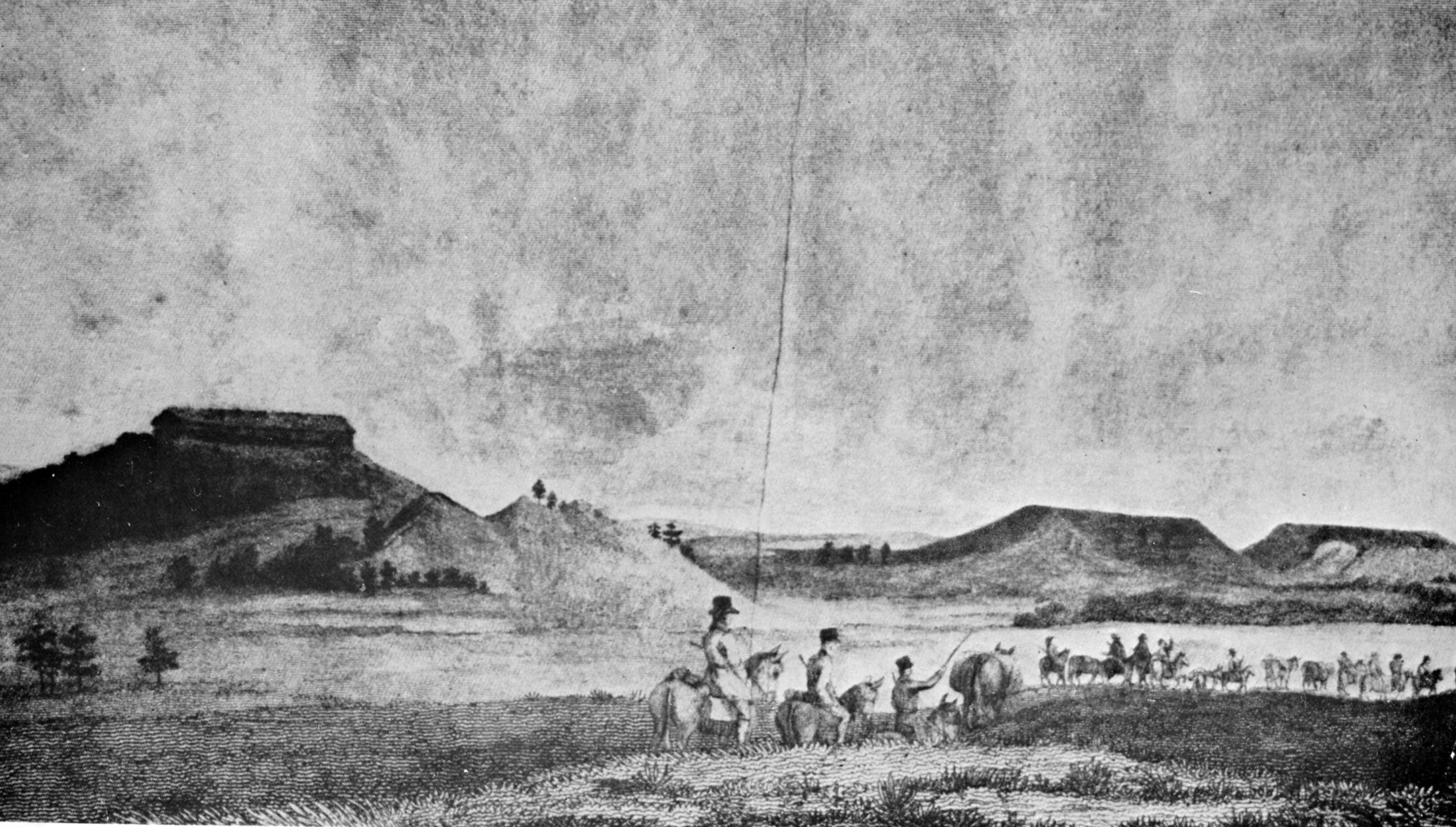
This desert myth was reinforced by Stephen Long’s expedition of 1820, which traveled along the South Platte River through what would become Douglas County. Long’s report explicitly labeled his maps with “Great Desert,” deeming the region “almost wholly unfit for cultivation, and of course uninhabitable by a people depending upon agriculture for their subsistence.” This perception, while grossly inaccurate regarding the region’s agricultural potential, ironically served as a temporary buffer, discouraging immediate American settlement and allowing indigenous peoples a few more decades of relative autonomy.
John C. Fremont
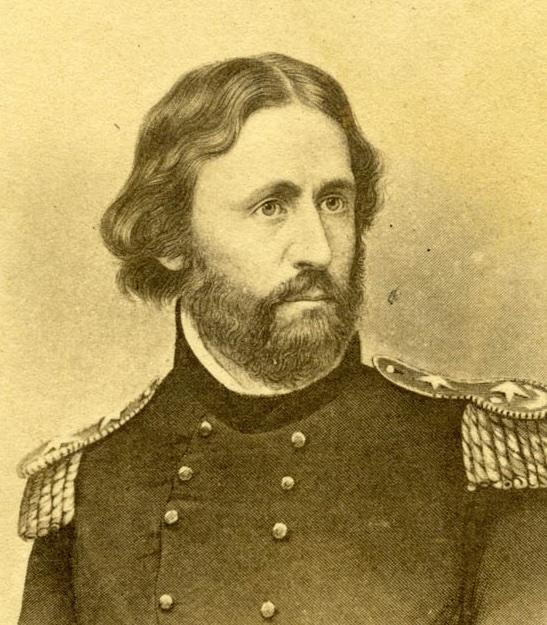
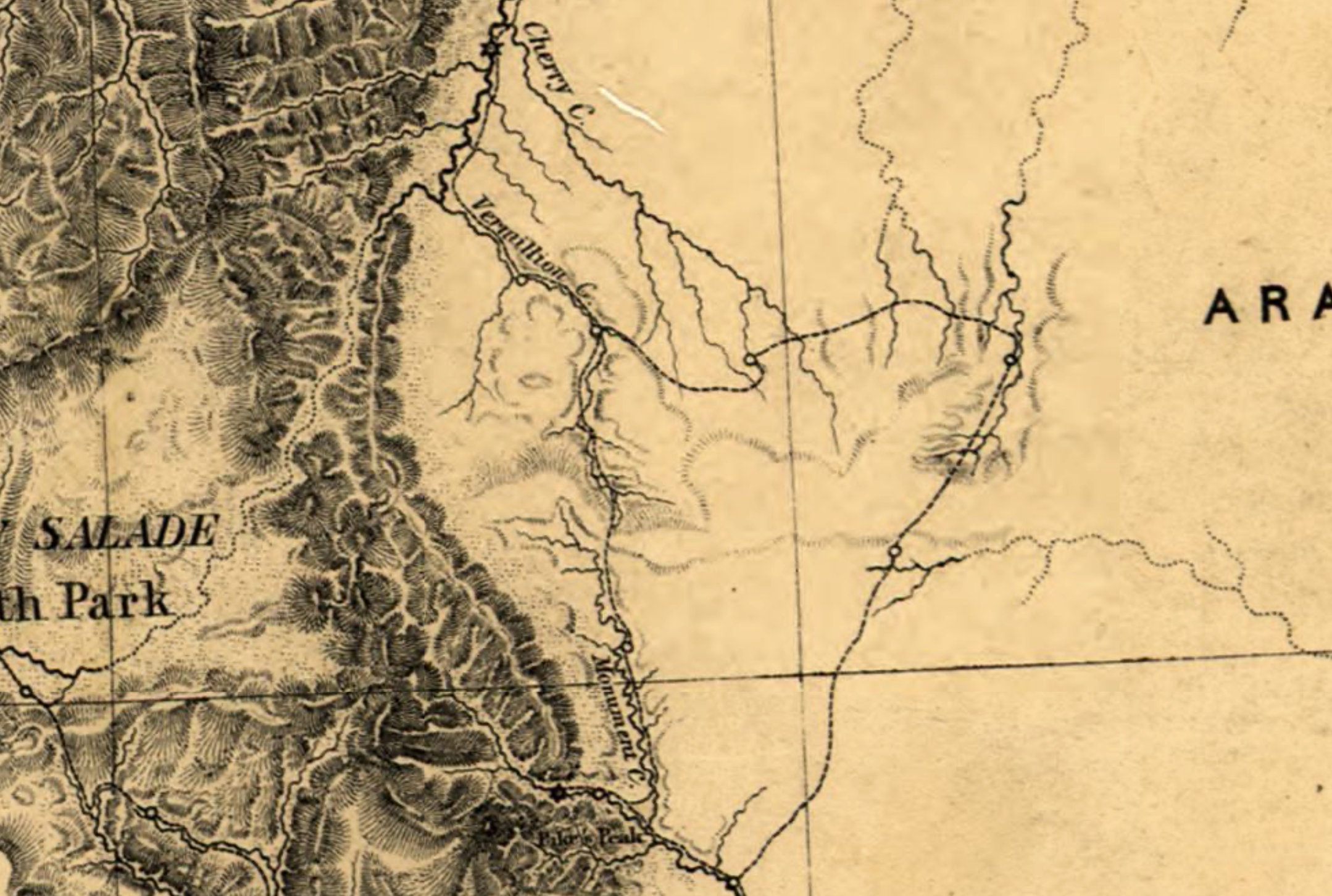
John C. Fremont passed through Divide Country on his second expedition in 1843. He crossed Divide Country and described it in rather glowing terms: “Although somewhat rocky and broken, and covered with pines, in comparison with the neighboring mountains, it scarcely forms an interruption to the great prairie plains… We had an excellent view of Pike’s peak from this camp, at the distance of forty miles. …these prairies are everywhere covered with a close and vigorous growth of a great variety of grasses, among which the most abundant is the buffalo grass.”
Early Settlers
Countless persons poured into the frontier, and many of their stays were unrecorded, These settlers arrived with the Colorado Gold Rush, were in the area prior to statehood, and had an enduring impact on the region are featured.
Sarah Ann Coberly
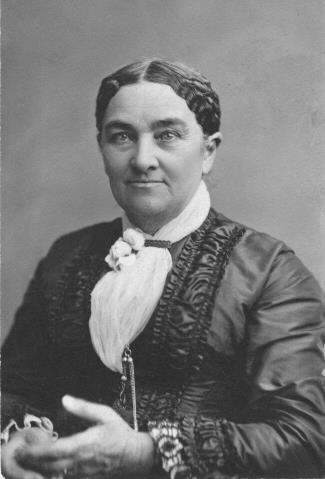
Sarah Ann Coberly, born Sarah Ann Parcel, is credited as being the first woman settler in the Larkspur area. was born in 1822 and married James Coberly at seventeen. Sarah, James and their three children joined a wagon train in 1859, as some of the 59-ers headed for Colorado gold country. Sarah was a founder of Huntsville near present day Larkspur. Known for her intelligence and industriousness, Sarah was her own independent woman. She divorced two husbands in Colorado and made the way for herself and children, indentured and otherwise. She operated the Coberly Half-Way-House, which was along the Territorial Road “halfway” between Denver and Colorado City. She was close friends with DC and Olive Oakes. Silas Soule, who testified against Col. John Chivington regarding the infamous Sand Creek Massacre, married her daughter Hersa Coberly. Sarah’s two sons operated the Coberly Cattle Company in Colorado. Sarah ultimately moved to California, marrying Clarkson Start and died in San Jose in 1898.
DC Oakes
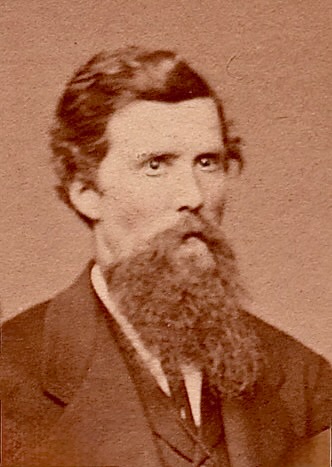
Daniel Chessman Oakes sometimes called “Chess,” was born in Maine in 1825 and moved west with his family as a boy, losing both parents by the time he was twenty-two. After a disappointing stint in the California gold fields in 1849, he married Olive Maria Martin and settled in Glenwood, Iowa. Drawn west again, D.C. reached Denver in 1858 and inspected the Green Russell party’s claims. Using Russell’s journal, he wrote the “Pike’s Peak Guide & Journal,” a pamphlet that helped lure thousands of hopeful miners to Colorado. When those disappointed “59-ers” turned back, they buried D.C. in effigy and threatened to destroyed the sawmill he was hauling west. He established that mill in Douglas County and a second at Huntsville, supplying much-needed lumber to a fast-growing Denver. D.C. later served as Indian Agent for the Grand River and Yampa Utes, as deputy U.S. Land Surveyor, and held posts as postmaster and election judge. He and Olive were close friends of Sarah Coberly. D.C. Oakes died in 1887.
AC Hunt
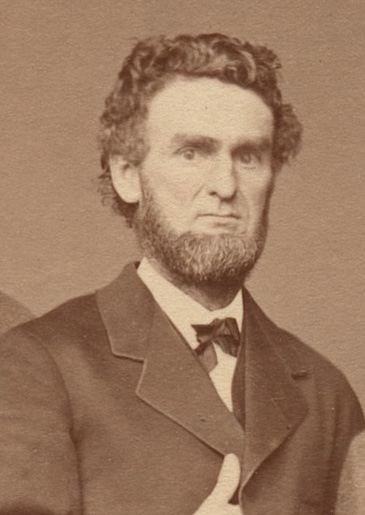
Alexander Cameron Hunt was born in New York in the mid-1820s and grew up in Freeport, Illinois, where he attended the town’s first school. As a young man he caught gold fever and joined the rush to California before returning to Freeport, where he became a businessman and was elected mayor. A.C. arrived in Colorado as a ’59er and is best known as the territory’s fourth governor. Prior to that, he was elected judge of the “vigilance committee” before the Colorado Territory existed, he helped bring law and order to the twin communities of Auraria and Denver. In 1861 Abraham Lincoln appointed him U.S. Marshal for the Colorado Territory. The town of Huntsville—home to Douglas County’s first post office—was named for him. In 1868 he escorted Ute chiefs, including Ouray, to Washington and helped negotiate the Hunt Treaty. The party included DC Oakes and Kit Carson. He later established one of the finest stock ranches in Colorado on Hunt Mountain, now the JA Ranch near Larkspur. He was one of the three men who signed the Denver and Rio Grande Railway’s articles of incorporation in 1871, and he is credited with naming Salida, Alamosa, and Durango. Having made and lost several fortunes, A.C. Hunt died in 1894 in Washington, DC, estranged from his family and far from the state he helped create.
Pearl James Grout
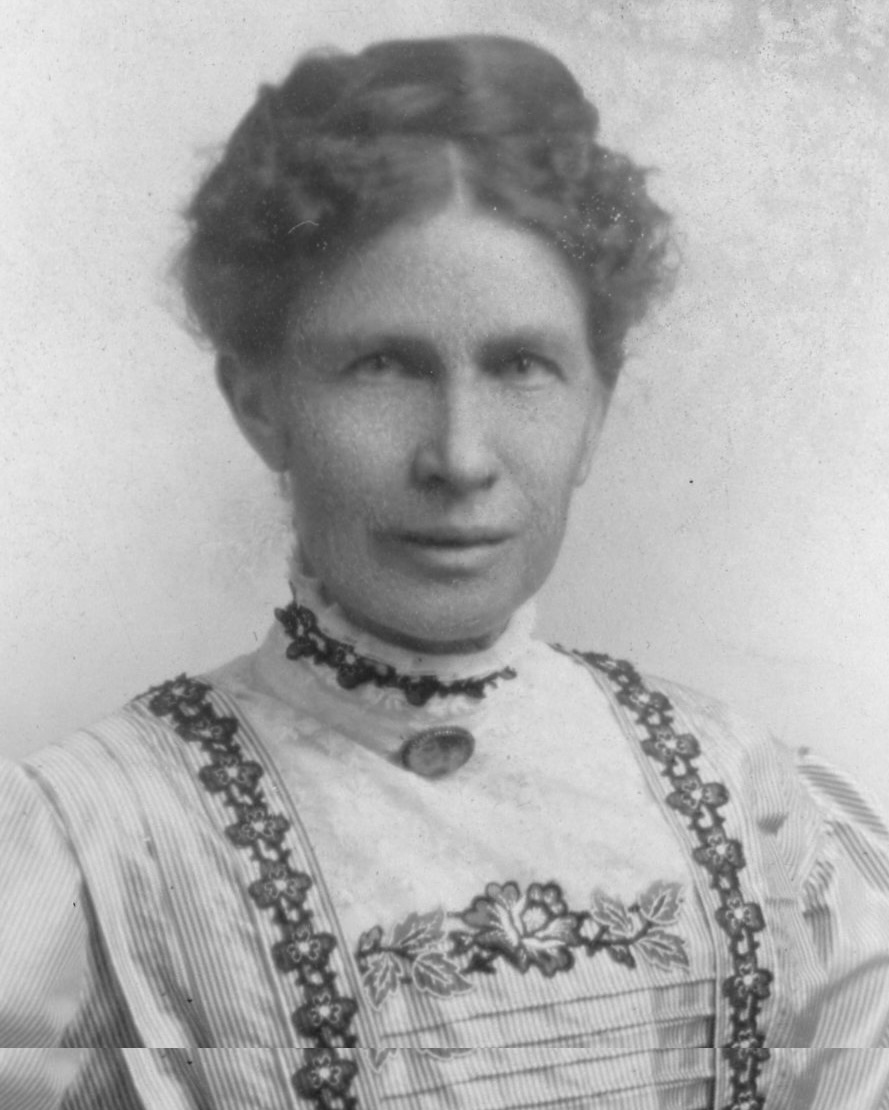
Martha Pearl James Grout was born in Illinois on September 28, 1852. She came to Colorado in 1860 with her parents, Mr. James and Mrs. Margaret James, by ox team, and they settled in Douglas County near Sedalia. Pearl James married Newton S. Grout on May 2, 1880. Newton Grout homesteaded the Jackson Creek Ranch in 1873. Pearl and Newton Grout were the grandparents of Amy (Amelia Pearl Stewart) Higginson. Pearl J. Grout died on December 28, 1928, at the home of her daughter, Mrs. Torgney Wolfensberger, in Longmont. She was survived by six children, a sister, Mrs. Mary A. Wells, and a brother, John F. Grout.